Home»Garden»Getting Started
Last Updated on August 9 , 2023
“ How do I even start to garden ? ” I get ask this question all the time , so if you are chew over this , do n’t concern – you are not alone ! While it seems like there are hundreds of detail to learn , and it can feel completely overpowering at time , it really does n’t have to be ! This article will go over the essential elements to consider to aid you plan your first garden space , but the unproblematic answer is :

If you are here reading this , honestly interested in trying to grow saucy solid food for you and your family , you ’re already on the right track ! The most essential element is a willingness to learn and attempt !
Think in terms of go under up asmall , accomplishable petty plot first . You ’ll have plenty of time to design your dreaming garden or worry about the details ofpest controlandautomatic irrigation subsequently . As clip goes on , through trial and error , look up entropy as question get up , and chatting with other gardeners , you ’ll project it out . You WILL make mistakes , but you will hear from them . And your successes ? They ’ll be oh - so - sweet ( or spicy ! ) . I will be here to help direct you on your fashion .
We started our first garden 12 year ago , plop in the grassy side yard of my college rental house . This was long before the daytime of “ Instagram - suitable ” designs , Pinterest vision boards , and online how - to tutorial . We seriously hadNo . Freakin ’ . Clue.what we were doing ! It consisted of two slight kindle beds made from salvaged Sir Henry Wood , a mates large pots , and a few things planted straight in the unamended ground . It was not neat , nor was it pretty . lease ’s be literal ~it was a underweight , slipshod , hot can mess!BUT we successfully grew some of the beginner basics : cherry tomatoes , summer squash , St. Basil the Great , and even one courteous bountiful honeydew melon melon ! It was the juiciest , sweetest melon vine I ’d ever tasted . It was then I got hook , thirsty for more!I think it ’s time we get you hooked too . Whaddya say ?

THE BASICS OF GETTING STARTED
Now let ’s go over them one by one now , shall we ?
LOCATION
prefer a location in your yard that gets maximum sunshine exposure – all twenty-four hours long , in all seasons , if viable . Yes , even if that means mighty in the center of the front lawn , because … why not ? ! # growfoodnotlawns ! Most vegetables favour to get as much Lord’s Day as possible , with a few exception .
Disclaimer : If you are removing dope to install raised beds , or have an issue withinvasive weedslike crabgrass , please do not install your seam straight on the ground or eatage without a goodlandscape fabric weed barrierbelow first ! memorise from our mistakes ! If your distance is n’t too weedy , you’re able to line the bottom of your seam with cardboard . This will suppress the growth of less incursive weeds .
If you have a small space or obstacles to play around , creating a few garden sphere that finish up with partial shade is okay . We have a handful of beds that get far less sun than the others . Some are shaded by our house in the break of day , or neighboring tree in the afternoon , depending on the time of year . We can still apply them toplant veggies that are more shade - large-minded like lettuce , Asiatic park , arugula , or mustard greens , to name a few . If you live in a mood with highly raging summer , your garden may even give thanks you for a picayune later good afternoon shade !

If you are in an apartment and practicingcontainer gardening , these same things still enforce . One welfare of using container is that they can be more mobile , such as on rolled dollies . This enables you to move them as the seasons and sunlight change if needed ! For indoor gardens , like a countertop or windowsill herbaceous plant garden , I suggest sunrise to midday sunshine . Be cautious and keep an eye on your plants if they ’re in direct hot afternoon sun right near a window . The amplified heat and intensity of rays through the window may be too much for the plant to manage ( peculiarly if we are talking herb here ) . Usingartificial lightingis another alternative for indoor gardens , but we ’ll save that for a later post .
render to take some time to observe your space in various season . Remember , thesun follows a dissimilar pathand will be lower in the sky in wintertime . If you dwell in the northern cerebral hemisphere like us , the Lord’s Day dips lower on the southern horizon in the wintertime . Will trees , your house , or other structures shade your garden in different times of year?This is especially authoritative to consider if you ’re in a mild climate like ours and want to wintertime garden . If you live in the arctic however , and plan to take the winter off and just chill ( rightly so ! ) , the wintertime sunlight pattern is n’t quite as important .
Gardening In the Northern Hemisphere
If you ’re in the northerly hemisphere , asouth - facing garden is an idealistic option . This orientation will provide your garden maximum sun photo from the south .
Would you like to save this?
We ’ll e-mail this post to you , so you may come back to it later !
I agree to get email updates .
Pictured above is an object lesson . We placed the front yard raise garden beds , intended for growing veggies , on the far north side of the yard to maximise southerly sun photograph . In the winter , the sun douse low behind the house ( behind me ) to the Confederacy and spew wraith on the yard area close to it . It would n’t have been wise to put our garden beds there . We also keep on thetallest feature – those with potentiality to cast shade like trees and treillage – on the far north side where the sun rarely plump behind .

Shown below is our coop garden country . When we first bought our home in 2013 , it was the heart of the summer . There was a patch of stain in the back M that nice and sunny – the perfect spot for the produce beds we dragged from our rental house , right ? ! Wrong . wintertime derive and they were in nearly 100 % nicety . Some greens did all right , but grew very lento and bolted quicker . Between the shady position , the very abject shallow beds ( we favor taller bed now ) , and the need for better chicken - proofing fence , we were more than okay with re - working this spot after a mates of years !
Now the garden beds in this expanse are on asouth facing wall . This not only maximizes Dominicus exposure in all time of year , but also takes advantage of theradiant heatthe wall emits . That supernumerary heat is much welcome in our climate , with our nerveless , foggy summers !
The last authoritative bit to ponder when you ’re choosing your garden location isproximity to a water source . Is there a hosepipe bib within a mates hundred groundwork ? Can an modal garden hose reach and be used to water the distance ? Are there survive pipes nearby that could be modified to add a tap if needed , or to tie an automaticirrigation systemto later if you hope ? Though there are many times I favour hand - watering to using automatize systems , you probably wo n’t require to lug heavy watering buns a far distance as your primary watering method . We ’ll talk more about water in a moment .

SIZE
When you ’re just getting started , go for something small and sustainable , both in the size of your garden and in the variety of plants you attempt to grow . If you need to go prominent or go home , then do it , by all means ! But the last thing we want is for you to feel overwhelmed and like you ’re “ fail ” from the get - go ! I suggest to build just one or two accomplishable farm garden beds , or give container horticulture ingrow bagsor pots a attempt . We definitely started pocket-sized .
If you’re able to avoid set up anything too detailed or lasting until you get your hands filthy for a season or two , you ’ll have thebenefit of timeto get a better feel for your distance , dream a little , and better estimate the size and landscape painting excogitation that you ’d prefer for the long run . You never experience what ideas you may make out up with over time , like the plus of fruit trees or pollinator - favorable borderline . Leave some way for growth and phylogenesis ! believe me , we have vary , re - arranged , and slow evolved our garden spaces SO many fourth dimension before reaching this full point . It does n’t pass overnight!Most of our spaces were done in phases over several years .
Also related to size , I suggestchoosing just a smattering of types of veg at first . I know that this is light said than done though , because if you ’re like me , you want to GROW ALL THE affair … now ! Chill . You ’ll get there !

STYLE
Decisions , determination … Do you dream of having a nice , streamline , dedicated area of severalraised garden seam , all in a neat row ? Do you need to plow land andplant straight in the ground , creating something a morsel morewhimsicalor twist ? Or , despite your violent works dreams , are you restricted by your current dwelling or situation ? If you are in an flat or townhouse , or have a home with a small patio grand , you may have to stick tocontainer - gardeningfor now . Do n’t concern , there is still so much you may produce in container ! I will put together a post on container horticulture presently .
On the other helping hand , even if you have a magnanimous amount of farming to figure out with , your dreams of planting straight in the ground may not be the best idea . For model , if you have an topic with burrowing pests like gophers or field mouse .
There are so wonderfulbenefitsof raised layer gardening ! In a nutshell : You have morecontrolover the condition , timber and texture of your dirt . We create and fill our kick upstairs beds with the “ perfect ” organic soil . Burrowingpestsand weeds can be blocked off from below withhardware clothandlandscape fabric . Our bodies and backsreallyprefer theergonomicsof raised beds over in - undercoat horticulture ! Last but not least , I do it how they take care . Raised beds create dimension andinterestin the garden . In my judgement , these benefits greatly overbalance the few drawbacks , such as the upfront cost .

That say , we also care to have plenty of more“wild”space around the gardens . Some country are overgrown and overflowing withfruit tree diagram , perennials , flower , herbs , and edible shrubs~ just the mode the local wildlife like it ! To learn more about creating a wildlife - favorable garden , and even get license as a Wildlife Habitat like we are , check outthis clause !
Here is our“How to Design & Build raise Beds”post with step - by - step photos , provision lists , save educational activity , and a demonstration video recording ! But if you are n’t feel up to building your own raised bed , that ’s okay ! There are some sort of flimsy kits out there , but there are also some really excellent , long-wearing , beautiful cedarraised bed kitsavailable too!These single from Gardener ’s Supplyget great review . They come in a form of sizes , and at 15″ abstruse , will provide a nice amount of root outer space for your plants .
Whatever style you decide onnow , most all the affair we are talk over in this post today are applicable . Do n’t have a style in head yet ? Start up a imagination dream board ! Pinterest and Instagram are wonderful ( but dangerous ! ) places for this . Looking at other gardens help you get an idea of the designing and feel you ’re going for , but again , try not to bite off more than you may chew at first ~ especially if you ’re going DIY . Take measuring in your outer space to picture out what could realistically fit where .

cognize that when we first started go on our yards , we hadno ideathat they ’d look the fashion they do now ! Not only did our visual modality develop over time , butwe learnedtonsof lilliputian tricks and practical skill during our earlier , modest projectsthat enabled us to feel sure-footed in tackling the self-aggrandising ones later on . you could always , always expand and morph flair with clock time ! We for certain have . I really enjoy have new projects to calculate forward to . It would have been way less playfulness if we did it at all once .
SOIL
If you are using raised beds or containers , fill them with rich constituent soil , compost , and if possible , an aeration additive(e.g . small ⅜ ” volcanic rock , pumice , or perlite ) . This is where you do n’t want to scant ! grime health and compost is EVERYTHING ! It is what nominate the deviation between a mediocre garden or a purely magical garden .
For our raised beds , we usually do a compounding of various organic bagged soil mixes and some bulk soil , volcanic rock , and compost delivered from a local landscape painting company . Especially if we have several swelled beds to fill . If we only have one new small bed , or are fill wine barrels or containers , we beat to just bag soil , amending it with volcanic rock and compost .
Don’t skip the compost!
Compostis constituent issue that has been soundly broken down and decomposed into rich nutritious - dense works nutrient . It is a killer soil conditioner and will make your garden beam ! We seek to tot up as much homemade compost from our worm bin or passive pile as possible . Often times do n’t make quite enough to come across out need , so we do end up supplementing with constituent bagged compost or bulk compost too .
Andworms!Don’t forget the worm . A small handful gets added to each bed along with insect casting from our worm bin . Worm castings are worm stern – also call “ fatal amber ” . Worms themselves are survive soil amendment ! They ’ll continually enrich and oxygenise the soil . Seethis postto learn how to create and assert a super simple worm bin at home base . Also ascertain out:“Composting 101 : What , Why & How to Compost at Home ” .
What about Fertilizer?
Most “ virtuous ” ground will probably need some amendingwith mild , balanced , slow - release fertilizers to keep your flora healthy , happy , and productive . This is dependable whether it comes in trucked bulk or from a bag . A few Down - To - Earth product we like to employ are thisvegan all - purpose fertilizer , kelp meal , neem repast , oralfalfa meal . These are sprinkled on top of the soil and lightly mold in a span times per year , ordinarily when switching out crops in beds . I always suggest going a little lighter than the instructions on the boxwood say to avoid overdoing it . You do n’t need to accidentally “ burn up ” the plant ! They all have their different benefit so we usually blend a few of them . If you were to start with just one , go for the all - role stuff .
If you want to grow food straight in your native grease without bed or container , you will require to till in a honest amount of richcompostand constitutional fertilizers to help enrich it . Also make certain it is not too obtuse or jumpy for plant to produce . We prefer not to till soil much once established ( a “ no - till ” philosophy ) , but you may need to at first for get it loose and all the expert clobber blend in . Ideal filth curb some wet , but also has good drain and what I wish to call “ bagatelle ” to it .
Building the perfect soilis way too important of a theme to attempt to quickly sum up in this crash - course . Seethis articleall about how to fulfill a parent garden bed and produce an excellent organic grease mix . Also , this postexplains how we amend our raised beds between seasons .
PLANTS
Should I start from seed, or buy seedlings?
For new gardeners , it may be most simple and stress - free tostart with institute seedlings(aka starts or transplanting ) from a local nursery rather thangrowing from seed . But you could go either way ! If possible , gossip a local nursery – not a big loge store – to find your seedlings . Not only will local establishments have good calibre and belike carry non - gmo and organic selection , but they should be carrying what isright to plant at the given moment . Unlike Home Depot , who betray tomato starts in the heart of winter . This is not the meter to start Lycopersicon esculentum in 90 % of gardens in the U.S. Hmmm … ..
Do You Know Your Zone?
You ’ll also want choose the right kind of plants for your zone and climate . Do a little research on what should be grown during sure time of year . If you are n’t certain , here is an easyUSDA hardiness zone lookup tool . Just enter your zip computer code and go ! For instance , our piddling homestead on the Central Coast of California is on the border of 9b and 10a .
If you’regrowing from source , note that you ’ll need to plan in advance and start a mo before . If you ’re prefer to buy seedling , note the time frame for “ transplant outside ” because that is fundamentally what you ’re doing . It is loosely suggested to transplant seedlings outside a duad weeks after your last rime particular date in the outpouring . learn up on“hardening off”seedlings before transplanting if you started from germ yourself ! greenhouse seedlings are generally already hardened off .
What types of plants should I grow?
Grow what you wish to eat ! Tomatoes , squash , Basil of Caesarea , or capsicum pepper plant ? Choose things you sleep together you ’ll enjoy anduse . That said , do n’t be afraid to try new thing . I did not likeradishesuntil we grew them ourselves . Now they ’re one of our best-loved things ! Everything is better homegrown . Plus , you feel more connected to it , so you ’ll savour it in a different agency now . Remember to throw in a few heyday for the pollinator too ! check off out ourTop 23 flora for Pollinators here .
It can be super inspiring to see other people ’s gardens online ! You may need to found what they ’re grow , but keep in intellect they may have a completely unlike climate than you . Go ahead and take some thought for brainchild , but also assay to make friends with the faculty at your local nursery . Those sept have the best perceptiveness for what grows well in your area and when ! no matter of what is “ ideal ” , I will always promote you to experiment . campaign your zona and season boundaries a fiddling !
Where to plant what?
Once you ’ve settled on asmall option of plants , do a quickGooglesearch on those you ’re aiming to grow . Read up on their the like , dislikes , or any special needs they have . Take into account their recommended spacing prerequisite and likely mature sizing . Do no overcrowd your plants ! Also call up the sun design when you are deciding where to plant matter . Keep the plant that will get tall , like tomato plant , in the “ back ” to avoid shading out smaller plant . I am working on building up a library of specific “ how to farm ” posts for dozens of type of plants . See this clause to learn all about companion planting * .
WATER
In cosmopolitan , mostplants wish to be moist , but not muddy for days . They ’re commonly most well-chosen when they get a nice cryptical crapulence but then have the chance to slightly dry out out between tearing . I do n’t mean altogether dry out out ! It ’s all about Libra the Scales . Before you set out to water system , poke around under the soil open a little bit . Is it still quite wet down there ? Or super dry , even several inch deep ? Then think about how much you last watered , when , and what the weather has been like . You ’ll start to notice a formula and get your own docket down . This will vary by your mood , season , sun vulnerability , mulching practice , and depths of your seam . recondite bed stay moist longer – just one of the many benefit that drives us to build deep beds .
The end is to water abstruse , down into their root zona and beyond , and then back off for a few days to let them breathe . Larger , thirsty , more institute plants will call for more pee . Smaller babes will require a little less . We prefer to keep the whole bottom moist , including the place between plants , rather than only watering right at the foundation of the flora . The roots will spread where moisture is . Thelarger the root system , the larger the plant!Plus , keeping the whole seam moist maintain the soil , worms , microbes – ALIVE ! Here is an clause all about watering:“Garden Irrigation Solutions : DIY , Non - Toxic , and Efficient Watering Options ” .
PROTECTION
The last point to consider is security . No , not from the neighbors that are going to be totally jealous and snitch from your awful new garden space ! What we ’re apprehensive about here aresmaller thieves : snort , cervid , rabbits , squirrel , gophers , or any little critter in your neighborhood that may directly go after your garden .
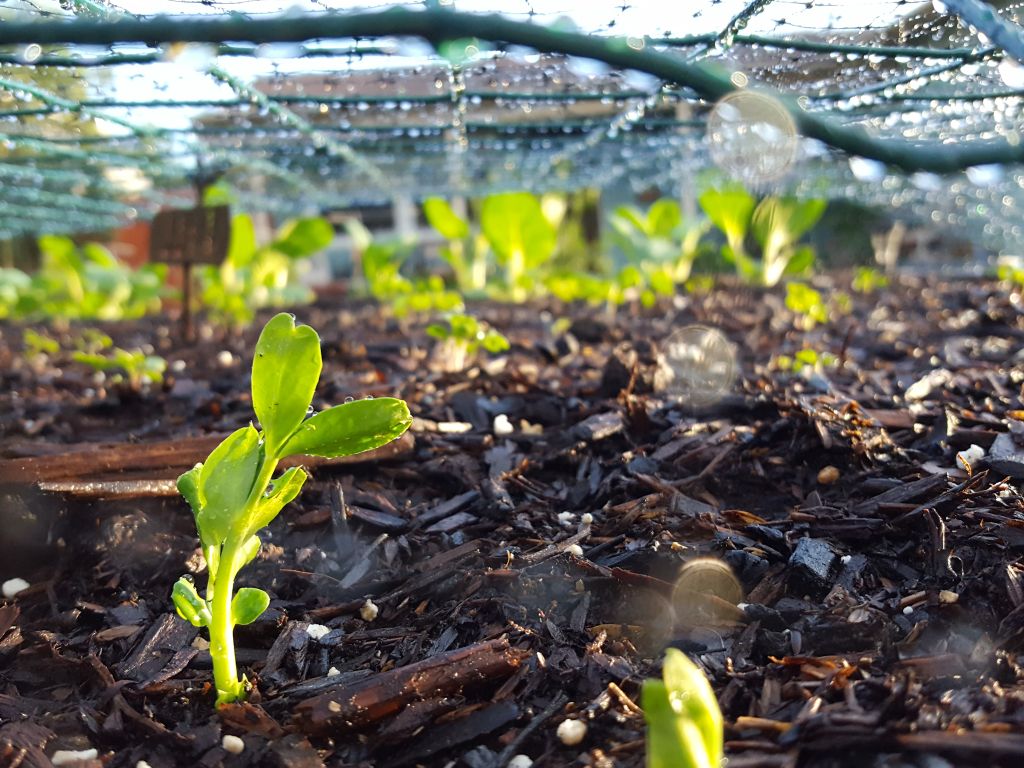
Here ’s the deal though : I do n’t require you guy rope go crazy build elaborate fences around your garden bed right away if you are n’t even sure if you take them or not . If you ’re in the county and have roaming deer or rabbits , you probably do . On the other hand , many suburban or urban gardeners may not need as much protective covering from above . The exception could be during a limited time while seeds are sprouting , or after cranky new seedlings have just been transplanted out . One example is using irregular bird nett over the beds ( see picture below ) . PVC ormetal hoopsandfloating row coversare another choice !
Burrowing pests
If you have gophers or voles around , contrive to line the bottom of your raised beds withhardware textile . This will prevent them from stick in and destroying your hard work ! No , wimp conducting wire does n’t usually do the trick unfortunately . Rodents can masticate through it . Chicken conducting wire will also take down with time . galvanize ironware material is rodent - proof and will hold in up for the prospicient haul .
During the first match of twelvemonth gardening , we did n’t need any forcible protection from above at all ! It was n’t until our garden bulge becoming an ecosystem of its own , drawing in more razz and other wildlife , that we started noticing impairment . Simply be mindful and make a reasonable appraisal based on your property . I surely would feel like a giant titty if you read this article , got stoke , tucked some new industrial plant - babies into your blade - new awesome raised seam , and then BAM – they ’re all gone the next morning . I eff the feeling , all too well . It really , really sucks….so let ’s avoid that , shall we ?
So there you have it!
One step at a prison term , one seed at a time , let ’s build you a trivial nirvana of your own . Now go get dirty !
For more foundation garden tips , check out our“Start Here”page of top Homestead and Chill articles .

