Irisspp.
Beloved for their striking , elegant blossom in a gilded raiment of colors , iris is a shine star in the early springiness to midsummer garden .
The gaudy flowers pose atop tall , slender stalking , beautifully framed with lover of emerald green , fizgig - like leaves that add together big erect structure all season .
depend on the variety , they thrive in beds , borders , containers , naturalised orbit , beside ponds and water system feature article , or in butterfly , cut , and cottage gardens .

Photo by Lorna Kring.
Plus , the knotty rhizomes make a beautiful and functional alternative for planting on unconscionable or unmanageable incline for eroding control .
We link up to vendors to help you find relevant products . If you purchase from one of our links , we may earn a commission .
Few plants can compare to their vast and extremely wide-ranging color palette . Flowers are useable in shades of blue , brown , hot chocolate , maroon , mauve , orangish , pink , red , tan , white , and white-livered as well as bicolors . And blooms are often further ornament with contrasting beards , crest , and attractive veining .

Photo by Lorna Kring.
The entrancing blooms are also sweetly fragrant , with a scent remindful of violets . The darker the flush ’s color , the more intense the fragrance , and they make a long durable addition to a vase of thinned flowers .
Rhizomes spread and multiply readily , form attractive clumps and provide sight of fresh plants . And they also attract important pollinator likebees , butterflies , and hummingbird .
Think you need to make a home for some in your garden ? Join us now for all the details on how to raise iris for glorious gloss and bouquet !

Here ’s what I ’ll cross :
What You’ll Learn
What Are Irises?
A hardy herbaceous perennial , Irisis both the common and botanic name for this large genus in theIridaceae family .
These works are beloved by gardeners for their colorful and fragrant flowers that flower on tall , sturdy stems . Some close family phallus you ’re in all probability conversant with includecrocus , freesia , andgladiolus .
iris diaphragm are classified as either bulbous or rhizomatous , and are native to temperate region of Asia , Europe , and North America , with habitats as diverse as their colors .

The rhizomatous types , with fatheaded , fleshy rhizomes , are the most democratic character for the base garden , and the centering of this template .
However , bulbous variety , like the European andearly - bloomingI. reticulataspecies , add together bold elegance as well , and also deserve a spotlight in the garden . To learn more about cultivation of iris bulbs , check off our pathfinder to growing bulging flag .
In the wild , works can be found in a variety of options from arid and semi - desert realm to bogs , meadows , and along riverside .

All iris diaphragm display detailed flower head incorporate of three large outer flower petal called “ lessen ” that flare out or leave out downwards , and three inner , upright petal known as “ standards . ”
There are some 300 coinage within the genus plus C of cultivars . For farm use , irises are loosely grouped into former , mid , and late time of year varieties .
And they also come in three dissimilar sizes , with nanus varieties growing only six to 12 inches tall , intermediates that grow to heights of 17 to 27 inches , and marvellous ace measure 24 to 48 inches .

Rhizomatous varieties are honest inUSDA Hardiness Zones3 to 10 in areas with ironic summer , and zone 3 - 8 in regions with warm , moist summers .
Learn more about the unlike eccentric of irises .
Cultivation and History
TheIrisgenus is named for the goddess who carried message from the divinity of Olympus to earth along a rainbow . And where she set foundation , beautiful flower of every color bloomed .
Among the earliest known artworks dedicate to the love of iris is a mural at the palace of Minos on Crete , that date to circa 2400 BC .
In ancient Egypt , King Thutmose III grew Syrian irises and had their image etch in stone at the Temple of Amon .

Later kings were also enamored by these flowers , and since the 6th century advertizement , the stylised iris in the form of the fleur - de - lis has been used as a symbolic representation for the French monarchy .
Although North America has several native species , early settler plantedI. germanicastock brought from Europe , with the first cultivation memorialise in the belated 1600s at Bacon ’s Castle , Virginia .
These plant are also cultivated for Florentine iris root pulverization – the dry , small-grained root ofI. germanica , I. pallida , orI. florentia .

Used primarily as a understructure banknote in perfumes , orris root has a delicate flowered fragrance and is also used as a fixative in perfumes and in potpourri blends .
It ’s also used in the kitchen and is one of the 30 - plus spice often let in in ras el hanout , a spice blend used in Morocco and other North African countries .
And when it is distilled , Iris germanica florentina retains its floral bank note , and is used to add astuteness and colour to many brands of gin , contributing a sweet , earthy flavor .

Propagation
For flowers the undermentioned yr , the best way to propagate iris is by rootstalk division .
However , propagate species plants from source is also an choice , although the sprouting rate can be as low as 50 percent and it can take two to three old age for flowers to come along . Seeds from hybrid varieties will not get genuine to the parent industrial plant .
From Seed
Seeds can be direct seeded outdoors in fall at a depth of half an inch , supply they ’ll receive the cold temperatures needed for vernalization : 34 to 41 ° F for at least 60 days .
If you wish to start seed indoors , add three or four seeds to small , four - in hatful , or space seeds an inch apart in a tray of moist peat moss , perlite , or vermiculite , cover with a quarter to half an inch of sensitive and space inside a light seal off plastic dish .
spot in the icebox or other frigid area where the temperature is between 34 and 41 ° F for at least 60 day . For sprouting , it ’s important that seeds have the right combination of coldness and wet during this vernalization menstruation .

At the goal of the insensate period , position the pots or trays ( still in the bag ) in a warm placement that receives brilliant , collateral light . The ideal temperature for sprouting is 70 to 75 ° F .
Once germ have sprouted , remove the bag from the tray or pile . Water gently when the top of the soil dry out .
When plant have three set of true leaves , acclimatize them for their new life outdoors for a week or so . Place in a lightly shady spot for two or three twenty-four hour period , then morning sun with afternoon shade for two or three days , then full sun after that .
When all danger of frost has passed , plant out into the garden as described below .
Root Division
Over time , rootstock can become crowd together which can stamp down florescence , and clumps should be divided every three to five years .
To rejuvenate clumps and create new plants , separate roots approximately six to eight week after flowering , or mid to former summertime .
Use a garden fork to loose the soil a few inch outside the ascendent clump , dig out six to eight in deep .

Carefully wrecking bar and lift the roots from the territory , ensuring you do n’t transfix the rhizomes .
Pull rootstalk aside by mitt or use a sporting acute knife to cut them . Select only respectable pieces and discard any that are soft , rotting , or show grounds of root borers ( see the Managing Pests and Disease discussion section below for info on radical borers ) .
disperse the trimmed pieces with a small-grained fungicide such as garden sulfur .

utilise clear garden pruners to trim down folio size of it by half – this preclude raw plantings from being shift by wind .
Replant fresh stock as outlined below .
witness more tips on dividing irises here .

How to Grow
Rhizomatous iris expect a full sun location in humus - enriched , well - draining ground with an idealistic pH of 6.8 . They also enjoy having a bed of their own to allow the creeping rhizome to grow and spread .
rootstock can be establish any time after inflorescence , from midsummer to early autumn .
Before planting , grunge should be loosened with a garden ramification to a profoundness of 12 to 16 inches , with compost or well - rotted manure mix in into the top six inch .

To ameliorate drain , mix in a shovelful or two of landscape painting sand or pea gravel , if need .
To implant , dig a hole a few inches longer than the rhizome and about four in inscrutable , and blend in somebone meal .
flock some lax soil into a ridge four inches gamey down the midriff of the planting hollow . Place the rootstalk on top of the ridge , laying the roots down on both side .

Gently backfill the jam , cover the roots but result the top of the rhizome exposed . tauten the soil in shoes and water deep .
When working with soil and mulching , it ’s important to go forth the rhizome tops exposed to the dry Sunday and melodic line . If they are plow with dirt or mulch , the excess moisture can lead rhizomes to sour and rot .
works rhizomes one by one or in groups of three or five , spacing them about three to five inches aside for midget and miniature varieties and four to six inches aside for marvelous ones . The leaf fan should be outmost with groups spaced 12 to 24 inch apart – less distance for dwarf variety and more for tall bewhiskered types .

For container growth , assure can have adequate drainage holes .
Fill containers with a weak , well - draining pot soil and works as outline above , keeping the rhizome tops exposed to the Dominicus .
pee gently to settle in place , and afterwards , pee when the top two inch of grease are dry .

In wintertime , move containers to a frost free location or add alayer of leaf or drinking straw mulchfor frigid protection .
Growing Tips
Pruning and Maintenance
put on a low-pitched nitrogen or balanced fertilizer ( 6 - 10 - 10 or 10 - 10 - 10 ) in early spring and once again after flowering .
Deadhead seed podsfrom species works to forestall beds from becoming overcrowded with seedlings . After unfolding , cut back the flower shuck but exit the leaf fan in lieu . Trim any brown tips if needed , but bear on the leave , as they ’re needed to produce energy for next class ’s outgrowth .
By fall , depart brown and pass away back . At this time you’re able to cut them back to six to eight inches to tidy beds and forbid pests and disease from overwintering . The remaining foliage will croak back over wintertime and can be cleaned up in former springtime .

To prevent overcrowding , raise and divide clumps every three to five years .
To keep weeds down and roots moist , mulch beds light to a astuteness of two inches – but remember to keep the crowns decipherable .
If you know in a dusty part , cut across bed with a mulch of leaves or straw for winter . polish off in early leap once new ontogeny appears .

Cultivars to Select
There are hundreds of species and over 500 cultivars to choose from , so you are sure to findthe perfect color combinationfor your garden !
Here are a few of today ’s democratic alternative :
Albovariegata
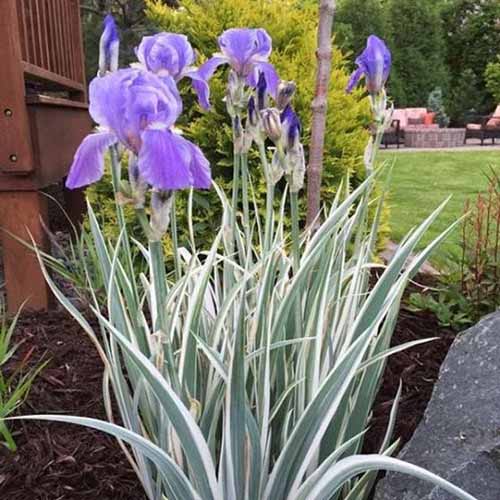
Variegated angelical iris , I. pallida‘Albovariegata ’ feature moony flowers of lilac-colored wild blue yonder with a contrasting yellow-bellied beard , a judicious flowered redolence , and striking , variegate foliage in cream and sage green .
‘ Albovariegata ’
Sublime in beds , bungalow andcutting gardens , and naturalized field or undecided woodlands , this species is also one of the seed of orris root . Hardy in Zones 4 to 9 , plants grow 24 to 36 inch in height .
plant in # 1 containers areavailable at Nature Hills Nursery .
Beverly Sills
Is that angels let the cat out of the bag ? You ’ll think so when the magnificentI. germanica‘Beverly Sills ’ put on its stunning public presentation in the late bound to early summer garden with large , frilly peak of flamingo pink highlight by a tangerine beard .
‘ Beverly Sills ’
A multiple awarding winner , this marvellous whiskery cultivar add together elegance to beds and foundations as well as cottage , court , and cut gardens . plant pass on mature high of 30 to 36 inches and are hardy in Zones 3 to 9 .
Bare root rhizomes areavailable at Burpee .
Harvest of Memories
Memorable for their foresighted flowering time of year and fragrant , gay blossom of lemon yellowness , I. germanica‘Harvest of Memories ’ is a reblooming bearded cultivar that flowers first in later spring then again in late summer to other fall .
‘ Harvest of Memories ’
A bright addition to beds and foundations or cottage , courtyard , and cut gardens . Plants reach a peak of 24 to 36 in and are hardy in zone 3 to 10 .
base of rhizomes areavailable at Eden Brothers .
Sugar Rush
In soft pastel shades , I. siberica‘Sugar Rush ’ is a lightly fragrant , beautiful bicolored cultivar with blue streaked , off - white standards and Battle of Magenta pink falls with a yellow signal mend .
‘ Sugar boot ’
Growing to a height of 26 to 32 inches , this Siberian cultivar heyday in late spring to early summer and prefers a site with moist soil .
Plants make a spectacular plus to bed , border , container , pool perimeter , and cut or unfounded garden . Hardy in zone 3 to 9 .
Bare root plants areavailable at Home Depot .
Water Iris aka Northern Blue Flag
One of our North American natives , I. versicolorfeatures lightly fragrant flowers of bright blue downcast to royal purple with yellow throat and openhanded veining .
prime time go from later spring to midsummer .
I. versicolorloves moist soil and build a marvellous , regal statement massed besides ponds , streams , and water features . Plants grow 30 to 36 inch and are hardy in zone 3 to 9 .
Blue Flag
This species can be grown from seed , and you may incur packets of 25available from Earthbeat Seeds .
need More Options ?
Be sure tocheck out our list of the top 33 best fleur-de-lis cultivarsto aid you find the good fit for your landscaping . There are chiliad of varieties out there and we ’ve narrowed it down to a survival of those with different color patterns , sizes , efflorescence clock time , and availableness to serve make your selection(s ) a trivial easy .
Managing Pests and Disease
Deer resistant and drought large-minded , irises ordinarily delight dear wellness . However , there are a few pests as well as bacterial and fungal infections to look on for .
Pests
Aphidsare humble unripe or hoary insects that suck sap from the leaves and also spread disease from plant life to plant .
Get rid of aphid easy with a unassailable gust of waterfrom a garden hoseto both sides of the leaves .
Borers are the larvae of theMacronoctua onustamoth and target the rhizomes of the tall bearded variety ofI. germanica .
control rhizomes on a regular basis for small holes about the sizing of a pencil tether or leaves that appear piss - inebriate . Any plants found to be infested should be removed and throw away .
Caterpillarscan chew golf hole in the foliation but are usually easy to ascertain with handpicking .
Snails and slugsare also known to munch on leave and flowers , create unpredictable holes .
Handpick and dispose of these plague , and take out any nearby hiding places such as boards , bricks , and garden debris .
A roadblock ofdiatomaceous earthis also in effect at restricting their access to plants .
Diatomaceous Earth
Food degree diatomaceous terra firma isavailable at Arbico Organics .
Weevilssuch asMononychus vulpeculusare a plague that like to spawn in the come pod ofI. versicolor , and regal Siberians , I. siberica . If fuel pod show multiple modest fix , take them and discard .
Disease
Soft bunkum is because of the bacteriaErwinia carotovoraand can be a job for bewhiskered iris , I. germanica . Most probable to occur during warm , sozzled springs , symptom admit balmy , smelly rhizomes , disintegration at the base of foliage , and rooter wilt .
When soft rot work stoppage , scoop out infected areas with a spoon and let the sunlight dry the remain tissue .
After sun - dry out for several hours , dust the combat injury with garden sulfur .
Bonide Sulfur Plant Fungicide
Bonide Sulfur Plant Fungicide isavailable at Arbico Organics .
Fungal crown rot , caused bySclerotium rolfsii , is a spreading , voiced gray mat that cover rootstock and the base of foliage fans causing decay , and most often appears in lovesome , moist condition .
To prevent peak putrefaction , maintain sanitary garden bed , expend clean , sterile tools when dividing rhizome , and promptly take away any septic stuff .
If treetop rot is a unconstipated problem , disinfect rhizomes before institute by dip them in a solution of bleach and water – 10 percent whitener to 90 percent water .
Leaf pip is a fungous contagion cause byCladosporium iridis , and most vernacular onI. germanica . It appears as water supply - soaked leaf spot that merge and darken to brownness and may have sooty - looking spore in wet weather .
Remove and dispose of any plant parts infected by leaf spot .
Rust , caused byPuccinia iridisfungi , shows up as small light immature to chickenhearted musca volitans with a rust-brown brown bump that progresses to black as leave of absence yellowish and shrivel from the summit down .
take and cast aside any septic leaves in the trash to arrest the spread of rust fungus .
Best Uses
Irises offer unbelievable diverseness with a immense array of colors , phase , and sizes that make them welcome in almost any area of the garden .
Be certain to plant some beside pathway and patios , or anywhere you could enjoy their sweet perfume and watch over the butterflies and hummingbirds they pull in .
Intermediate and taller varieties make a prominent addition massed in the center or backdrop of assorted repeated beds and foundation plantings , and in cottage , courtyard , and cutting garden .
nanus and medium sizes develop well in containers and patio pots , and all sizes – dwarf , medium , and tall – make delightful borders .
cap potpourri such asI. crestatado well in light tint gardens because they can get by with less full sunshine than most others .
Quick Reference Growing Guide
Goddess of the Garden
Flowering from other give to midsummer , the goddess of the garden delights us mortals with the rainbow colors and sweet fragrance of the beautiful iris !
gentle to naturalise , these rich plants procreate promptly and put up charming flush that increase yearly .
Remember to give them plenty of sunshine , provide excellent drainage , and keep the big top of their rhizome exposed to the sun and air for masses of flush .
And for more musical theme on early spring to midsummerbloomers , add these articles to your indication list next :
Photos by Lorna Kring © Ask the Experts , LLC . ALL right hand RESERVED.See our TOSfor more details . in the beginning published November 7 , 2017 . Last updated May 6 , 2021 . production exposure via Arbico Organics , Burpee , Earthbeat Seeds , Eden Brothers , Home Depot , and Nature Hills Nursery . Uncredited picture : Shutterstock .
About
Lorna Kring
